← Back to Quick Guides
- They meet most show requirements
- they are friendly, rarely poop when calm, can do multiple shows, can be boxed for transport, and do well with Miami heat.
The Indian Star Tortoise (Geochelone elegans) gets its name from the beautiful star-shaped radiating patterns on its shell, which help break up its outline in dry grasslands as camouflage. Adults usually reach 8–12 inches depending on locality, with females larger than males. Life span can exceed 50–80 years with proper care. They are native to India, Sri Lanka, and parts of Pakistan, living in dry forests, scrublands, and semi-arid grasslands. They are generally solitary but tolerate group living if space is adequate and males are monitored. They are diurnal, active during daylight, and spend much of their time grazing or hiding under vegetation. Their high-domed shell protects them from predators and helps deflect being flipped. Fun facts: they are one of the most poached tortoise species in the world due to their attractive shell pattern; when frightened, they often stiffen and tuck tightly rather than try to flee. Insert image here when you print your guide.
Enclosure
Provide a large, open enclosure—minimum 4x2 ft for a single adult, but bigger is always better. Outdoor pens in Miami are ideal when temperatures are safe, offering natural sunlight and grazing. Indoors, use deep cypress mulch or a cypress-soil mix, which helps maintain humidity without molding. Keep a basking area between 90–95°F and a cool zone between 75–82°F. Ambient humidity should remain around 50–70 percent, avoiding wet or swampy conditions as this species prefers dry environments with moderate humidity. UVB is required for healthy shell and bone growth. Ideal temperature range is 75–95°F. They cannot tolerate cold well—avoid temperatures below 70°F. They can handle warm weather but do not allow overheating above 100°F without shade and hydration.
Diet and Hydration
Feed Indian Stars a high-fiber grass-based diet. Offer daily portions equal to the size of their shell, mostly greens and grasses. A typical weekly schedule consists of daily grazing greens like Bermuda, orchard grass, timothy, and mixed weeds; rotate in dark leafy greens such as collard, mustard, endive, and escarole. Provide occasional treats once or twice a week such as hibiscus leaves or flowers, pumpkin, or small amounts of cactus pads. Avoid sugary fruit and high-oxalate vegetables. No animal protein should ever be fed. Toxic foods include avocado, rhubarb, azaleas, and any houseplants not proven safe. Hydrate by offering a shallow water dish and soaking juveniles three times a week and adults once or twice a week. Supplement calcium lightly two to three times weekly and use a multivitamin once weekly. They naturally graze throughout the day and may be shy at first, hiding or eating when undisturbed.
Health
Indian Star Tortoises are prone to respiratory infections if kept too cold or damp. Overly wet conditions can cause shell rot. Internal parasites can occur without proper sanitation. Metabolic bone disease is a risk if UVB or calcium intake is insufficient. Always watch for wheezing, swollen eyes, bubbles from the nose, pyramiding of the shell, or lack of appetite.
Handling
Indian Stars are shy and can become stressed with excessive handling. When handled calmly, they usually tuck into their shell but are non-aggressive and safe to hold. Support their entire body from underneath—never dangle or tilt them abruptly. Keep handling sessions short to avoid stress. For animal shows with children, they can be suitable because they are calm, non-biting, and not messy; however, they are not as “interactive” as mammals or lizards. They tolerate being displayed but should not be passed around repeatedly.
More Tortoises
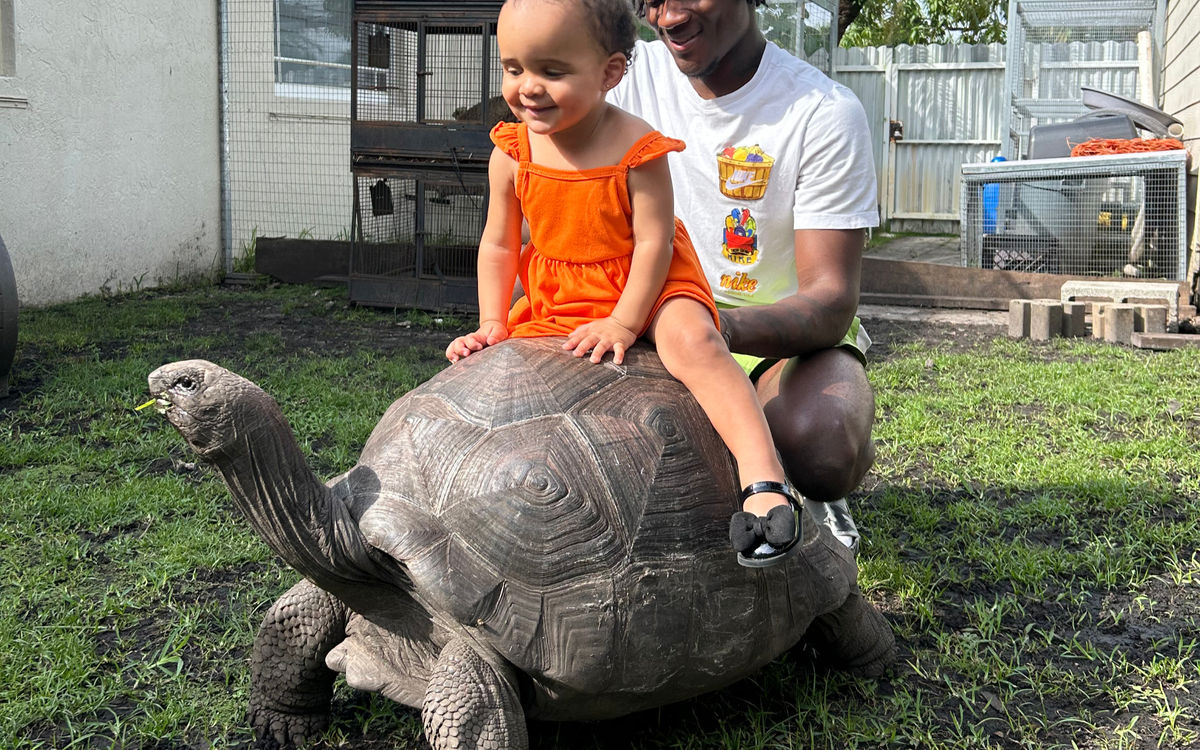
Tortoises
Aldabra Tortoise
Scientific Name: Aldabrachelys gigantea Species Name Meaning: Named after the Aldabra Atoll in the Seychelles, its only natural home.
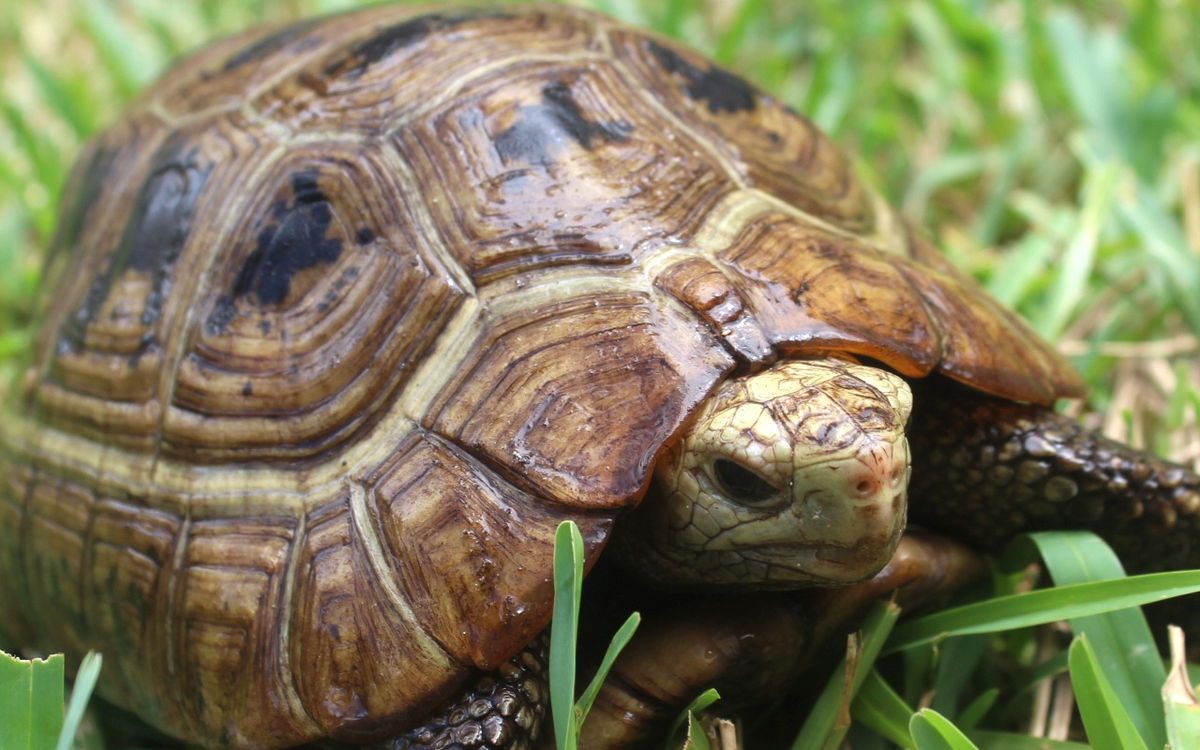
Tortoises
Elongated Tortoise
The elongated tortoise (Indotestudo elongata) gets its name from its long, oval-shaped shell.
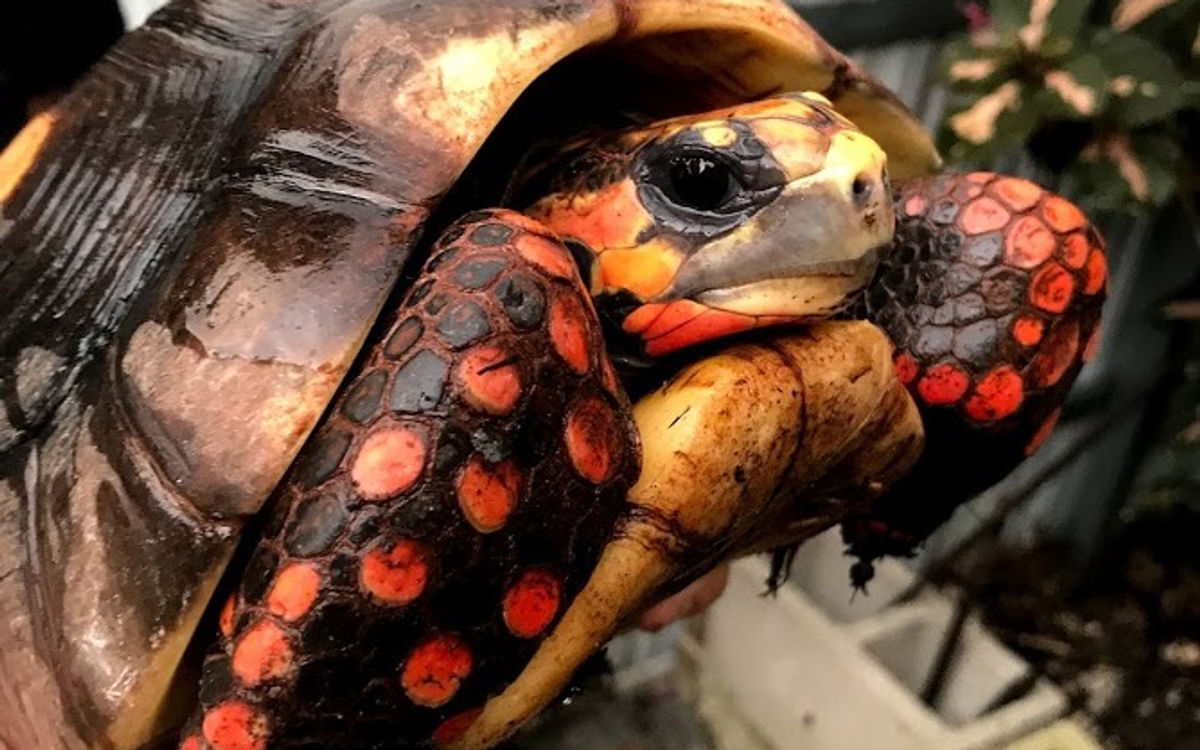
Tortoises
Redfoot Tortoise
The Redfoot tortoise (Chelonoidis carbonarius) gets its name from its bright red, orange, or yellow scales on the legs and head.
Want to Meet One?
Book an encounter and see this animal in person, or ask us anything about its care.
Book an Encounter